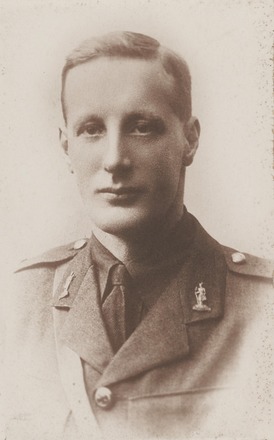
According to the only available document referring to George William Allen, he was born in Temuka in 1874. He first appears, with some certainty, in court in 1903, charged with obtaining a graphophone (a wax cylinder phonograph) by false pretences. He was sentenced to two months in prison - it was not his first conviction.
A man named George Allen was arrested yesterday on a charge of obtaining goods from several city tradespeople by falsely representing himself to be “Captain Nella,” of the New Zealand Torpedo Corps. Another man was arrested on warrant on a charge of deserting his wife in Melbourne. -NZ Times, 11/7/1905.
POLICE COURT.
THIS DAY. (Before Mr Dyer, SM.) Drunk. — Three first-offenders for drunkenness were punished by fines ranging from 5/ and 2/6 cab hire to forfeiture of bail £1.
Devonport Case. — James E. Lund, on remand on a charge of lead theft from a yacht at Devonport, was reported on by the probation officer to be addicted to drinking and gambling. On the accused submitting to a prohibition order he was released on probation for twelve months and ordered to pay costs 24/.
False Pretences. — George Allan, alias Captain Nella, who yesterday pleaded guilty before Justices to obtaining £2 from Alexander Barren, and £4 10/ from James William Thompson by falsely representing that he was engineer of the Tramway Co. at a salary of £8 10/ and owner of a motor-car, was now brought before his Worship for sentence. He attributed his crime to drink. He had been seventeen times previously convicted. Sentenced to nine months' imprisonment. -Auckland Star, 21/9/1906.
POLICE COURT
this day
False Pretences. — A slenderly-built man named George Allen, alias Captain Nella, pleaded guilty to a charge of collecting money by false pretences, but pleaded for another chance. The delinquent, in this instance, had represented himself as a "Herald" reporter to a resident of the town, and had received 3/6 from him for the insertion of a death notice. A glance over his interesting past disclosed the fact that of the last ten years he had been in retirement during six, at the expense of the country. He was given the maximum sentence, three months. -Auckland Star, 19/7/1907.
District Pars
On Friday last, at Auckland, George Allen, alias Captain Nella, was charged with obtaining £l 5s from Daniel Scown by means of a false pretence. Allen was further charged with stealing, at Te Kuiti, two bottles of whisky, value 11s, the property of Daniel Scown. The case was remanded till Friday, October 25th, at Te Awamutu. Bail was allowed, accused in his own recognisance of £100, and two sureties of £50 each. -King Country Chronicle, 25/10/1907.
POLICE COURT
A Week's Remand. — "I should like to be remanded so that I can appear again before you, sir," insinuated George Allen alias Captain Nella, to his Worship, in applying for an adjournment of the case in which he was charged with having obtained 14/6 by other than honest measures from one John Cargill "I don't want to appear before any other magistrate but yourself." "Nonsense, nonsense!" returned Mr. Kettle, impatiently, and remanded prisoner till Wednesday. -Auckland Star, 4/11/1907.
"Tired of Life."
BROUGHT BACK BY MUSTARD AND WATER
Constable Henry had a rather exciting experience at Paeroa, on Saturday night, with a man named George Allen, alias Captain Nella, who he had arrested on a charge of obtaining food by false pretences at Waihi. When taken to the police station, Allen took something from his pocket, and quickly slipped it into his mouth, with the result that he fell back into a chair in a state of collapse. His eyes turned "glassy," and altogether he had the appearance of a man who had just about finished with the joys and the troubles of this life. The constable lost no time in asking useless questions, but promptly mixed up a good dose of mustard and water, which he administered to Allen, with the result that the latter soon recovered. Whether Allen took poison or not it is difficult to say with certainty but he told the constable that he was about tired of life, so it would appear as if the mustard and water had been the means of preventing his exit at present. -Ohinemuri Gazette, 24/2/1908.
A WAIHI "SPIELER."
(By Telegraph. — Own Correspondent.) WAIHI, this day. In the Police Court to-day George Allen, alias Captain Nella, was sentenced by Mr. Wallnutt and Mr. Holmes, J.P.s, to one month's imprisonment on a charge of having obtained £1 2/ by false pretences from A. E. Woodward. The prisoner represented himself to be head electrician at the battery, and borrowed money on the strength of giving Woodward employment. -Auckland Star, 24/2/1908.
A Polished Imposter.
"CAPTAIN?" NELLA AGAIN.
THREE MONTHS FOR FALSE PRETENCES.
AN ASTOUNDING RECORD.
At this morning's sitting of the Thames Police Court a respectably dressed man named George Allen, rejoicing in the possession of various aliases, viz., Lillywhite, Captain Nella and Captain Chappell, who appears to have made his unwelcome presence felt on various portions on the goldfields, was charged with false pretences and with being a rogue and vagabond.
Messrs A Burns and J. Finlay, Justices, presided. Accused was undefended, while Detective Cooney prosecuted on behalf of the police.
The evidence of witnesses was to the effect that the accused had been in the habit of calling on business people on some bogus plea and after explaining that he had been in the hospital and was acquainted with leading Thames citizens, he asked for the loan of money. In two cases he was successful, after stating that he was employed at the foundry, but this was found to be an untruth. In one case the accused presented an appearance as though he had been working at the foundry. He subsequently said that he had money to draw from the foundry, but this was denied by one of the firm, who stated that accused had not been employed there. It appeared that he also approached another resident of Thames and stating that he was anxious to get work in the country he had borrowed money from him. It appeared that from the time the accused landed at Thames he had imposed upon many people, including a constable who knew accused and who knew that he had previously been before the court. To him accused stated that he had decided to go straight, and that he was going to work at the foundry. He had not done so and to subsequently told people other stories and succeeded in getting money from them. Accused said that he had been hounded down by the police.
Detective Cooney stated that this was not so. As a matter of fact the accused had asked the Inspector of Police to send him money. The Inspector had stated that he would give him a couple of shillings and did so. As soon as the Inspector's back was turned accused went to another and secured more money. Members of the police force had also assisted accused, believing that he really did intend to go straight. The accused was an out and out impostor, and if he were allowed to leave the town as he desired he would take advantage of the opportunity and victimise someone else. The accused was a polished but incorrigible rogue.
Accused made a rambling statement as to his bona fides and intentions, but his remarks had little bearing on the present charges, on which convincing evidence had been tendered by Messrs Scott, Messrs W. Price, W. Carson, and G. Gibb, and Constable Berry.
The Bench convicted accused and after inspecting the list of previous convictions said that it was useless to deal leniently with such a man. Accused would be sentenced to three months' hard labour in Auckland gaol. The accused has had no less than 28 convictions recorded against him since 1897, and his sentences, ranging from 14 days to 12 months, aggregate 6 years. The convictions commenced in the year stated and continue through every year to the present period. -Thames Star, 3/9/1908.
A FALSE PRETENCE.
[BY TELEGRAPH. — PRESS ASSOCIATION.] Napier, Monday. A man named George William Allen (alias Captain Nella), who obtained some money on the false pretence that he had come to Napier to start electric trams, was today sentenced to three months' imprisonment. -NZ Herald, 8/12/1908.
MAGISTERIAL
— George Allen, alias G. Nella, was charged with having on or about September 11 forged a cheque purporting to be signed by G. Nella on the Bank of New Zealand, Lyttelton, for £5 2s. C. K. Cotton, teller in the Bank of New Zealand, Lyttelton, said that accused called upon the manager of the bank on September 9, and after leaving the manager's room asked for and was given a portion of a cheque book. There was no account in the name of G. Nella on the bank's books.
G. R. Oliver, tailor, of Sydenham, said that on September 13 a man who gave his name as Hayes called at his shop with a piece of cloth which he required made up into a suit. On September 20 the man returned and got the suit, for which he paid by the cheque produced. He gave him £2 7s in change.
Cross-examined by accused, witness said that he did not know accused. Hayes was tall, clean-shaven, and fairly-well dressed.
Frank Tyler, hall porter at the Christchurch Hospital, said that on September 11 two men called at the Hospital. They had to sign their names, and he saw one of them fill in a cheque. He was called over to witness the filling-in. He was given to understand that the second man could only write his signature. The first man mentioned filled-in the cheque, but he did not see any signature put to it. The second man said that his boy was in the hospital, and he wanted to pay him some wages. He could not identify the cheque produced as the one he saw filled-in. He could not identify the accused, and he did not know the other man. He could not say that the two men went away together.
Gibson, acting-detective, said that he showed accused the cheque produced, and he denied signing the name "G. Nella" to it, but admitted getting a man to fill in the cheque at the Hospital. He said that the cheque had been stolen from him at a boardinghouse in Colombo Street. He had had great experience in handwriting, and he thought that the signature on the property-sheet, "G. Allen," and the signature on the cheque, "G. Nella," were written by the same person. He knew accused's writing well. The word "Nella" was "Allen" spelt backwards.
Cross-examined by the accused, witness said that accused had denied signing the cheque. On inquiry he had found that there was no truth in the statement that accused had been robbed in the boarding-house. The people in the house knew nothing of any robbery. Accused reserved his defence, and was committed for trial at the next sessions of the Supreme Court. -Star, 29/10/1909.
THE ARTFULNESS OF ALLEN.
Dodged the Danger but Shared the Cash.
At the Christchurch Criminal Sessions a man named George Allen, who is at present undergoing a twelve months' sentence, was presented on two charges of forgery. It would appear from the evidence that Allen obtained a blank cheque from Warner's Hotel, but was cunning enough to get a confederate named Llewellyn Price to fill it in for £5 4s 9d and sign the name of "F. Ross" to it. Price, who gave evidence against Allen, is now wearing the King's uniform in the Lyttelton "jug." Price engaged rooms at the Al Hotel for himself and "Mr Ross," and endorsing the cheque. "I Sandilands," got it cashed by licensee Thomas Allen, who hadn't appeared in the transaction at all, shared the cash. As a matter of fact, he took elaborate measures for the protection of his own skin, and confidentially advised Boniface Sutton, of the City Hotel, and licensee Daniels, of the Dominion hostelry, not to cash the cheque presented by Price or "Sandilands." Allen did fill in the second cheque for £5 2s, made out in the name of "G. Nella," which is Allen spelt backwards. 'Tec. Gibson said that Allen used to be known as Nella. He procured a blank cheque, and later a book containing nine forms, from the Bank of New Zealand, Lyttelton, filled it in for the amount mentioned, presented it to G. R. Oliver, tailor, Sydenham, in payment for a suit, and received £2 7s change. A verdict of guilty was returned in both cases.
Allen, who is 47 years of age, related how he had been spilt out of Black Maria on his way to trial, with the object of softening Judge Denniston's heart, but his Honor discovered that Allen enjoyed the unenviable record of twenty-four previous convictions.
Allen remarked that he had never before faced the Supreme Court, whereat his Honor was amazed. He declared that accused should long ago have been dealt with as an habitual criminal. Allen had participated in an ingenious scheme of forgery with the object of appearing in the matter as little as possible, and he would he sentenced to three years' imprisonment. Also, he would be declared an habitual criminal.
In the opinion of Allen, this was adding insult to Black Maria injury. -NZ Truth, 4/12/1909.
CHARGE OF FRAUD.
HOTEL KEEPER MAKES ADVANCE TO AN ALLEGED SURVEYOR.
The easy manner in which George Allen, alias Captain Nella, was alleged to have taken in the landlord of a local hotel by representing himself to be a Government surveyor at the moment financially embarrassed led to his being charged before the court at New Plymouth on Thursday afternoon with having obtained the sum of £6 by moans of false pretences from Spencer Ridgley.
Mr. A. Crooke, S.M., presided and Senior-Sergt. Haddrell conducted the prosecution.
Spencer Ridgley, licensee of the Terminus Hotel, New Plymouth, said, that on Friday, June 19 last, accused introduced himself at the hotel. He arrived there about 9 a.m. and called for a drink, which was given him. He posed as being a Crown surveyor, having eighteen men under his command. He said his name was Captain Nella and said he had been making use of the house more or less for the past twenty years. He arranged for accommodation for himself and also four men who were to arrive by the evening express. He also said he had eleven other men arriving by the following morning’s train, but as some of them might get on the spree he did not wish to have them in the house because it might get a bad name. He arranged to pay for himself as he went along and the licensee would have to get Government vouchers signed for the men. Accused promised to supply the vouchers. Accused returned again about 11 o'clock, went into the office and while there Captain Stevens happened to arrive. The latter used the telephone, after which witness introduced “Captain Nella” and his friend. During the conversation which followed accused told Captain Stevens of his position and said he had come in to release some of his men who had been taken to ‘'jug” for drunkenness. This had cost him £7 10s for seven men. He said he had an appointment at the office at three o’clock, and again referring to his eighteen men said one of them was Stewart Seddon, King Dick's son. He then asked witness to ‘‘stand for him” for £4, he being left short of money on account of having bailed his men out of gaol, and wishing to pay one man. Witness lent him the £4 asked for, he promising to return it after he had been to the Survey Office and got his arrangements settled up, which would be not later than the following morning. Accused and, his friend then left the house, returning again some considerable time later in the day, and asked for the loan of another £2, saying he wanted to go down and meet his four men who were arriving by the train, and that he would give a cheque for the full amount in the morning. Nothing more was seen of him, his friend or the four men who were to have arrived.
Accused: You said it was about nine o’clock when we arrived?
Witness: Yes.
When did we leave the bar? — Some time later. We never left the bar until one o’clock, when you took me in and gave me a plate of soup. — My evidence is correct that you left the house between 10.30 and 11 and returned again later, staying about the premises until after lunch.
Will you swear that you and Captain Stevens did not stay round the bar with me from about 10.30 to one o'clock drinking Green Stripe whisky? — No, we did not.
After dinner we went back to the bar? — Possibly so.
Why do you say “possibly so?” You are so positive about your other evidence. — I can't be sure, your Worship: I am not in the habit of doing this and can’t quite remember.
Do you remember Captain Stevens leaving after having the first drink after dinner? — Yes, I remember that.
Didn’t I ask you to lend me a cheque on the Bank of New Zealand? — Yes, but that was early in the morning. I didn’t give you a cheque, but I think I gave four single notes.
Did you volunteer to lend me what I wanted? — No, undoubtedly no; I did not.
When did you lend me the £4 you say you did? — Some time before lunch, as far as I remember.
When did you lend me the £2? — About 7.30 p.m. on the same day.
You did not tell Detective Boddam that you lent me the different amounts on separate days? — No, I did not.
Witness added, that when the second £2 was tendered accused apparently dropped one note on the desk, as he found it there after accused had left. So that really although £6 was given him he only received five.
Accused: And you were not honest enough to return it to me? Witness: You had left the hotel and so I could not give it you.
At this time was I drunk or sober? — I should say you were quite in your right senses, and knew well enough what you were doing.
Do you mean to say that a sober man would ask for two pounds and then drop one? Why did you not notify the police that you had given me only £5 instead of £6?
Senior-Sergt. Haddrell interposed that accused had no right to ask such questions. The £1 note found on the desk might have belonged to someone else. In any case it made no difference to the charge.
Captain A. C. C. Stevens, of the New Zealand Staff Corps, stationed at Hawera, remembered the occasion when he used the telephone at the Terminus Hotel on his arrival from Hawera on June 19. The telephone was immediately outside the office. Mr. Ridgley introduced witness to the accused, and in the course of conversation the accused informed him that he was a surveyor in the Government employ and that the particular duty which brought him to New Plymouth on this occasion was to bail out seven of his workmen who had “got on the loose” the night before in New Plymouth and had been run in by the police. He mentioned that it had cost him £7 10s to bail out these men, and incidentally said that one of them was young Seddon, young Stewart Seddon, but enjoined witness to strict secrecy on that point. After lunch the accused made searching inquiry from witness as to the bonafides of one of his permanent staff instructors, with whom he said he had an appointment at 3.15 with a view to letting him a house. Witness saw Mr. Ridley go to the safe and hand to the accused what might have been four or five, or possibly six, £1 notes.
Accused: If Mr. Ridgley says he gave me the notes before lunch then he would be wrong?
Witness: As far as I recollect it was after lunch. At any rate I distinctly saw you receive the notes over the slide from the office.
Follett Carrington, a duly qualified surveyor in the employ of the Government, produced the list of surveyors in the Dominion. He had searched the list and the name of George Allen, George Allan, or Nella did not appear there. There was no one of that name working for the department in Taranaki or in private practice. The accused was not a member of the staff.
Accused: Why did you remain in court after you heard that all witnesses were ordered out of court? Witness: Because I was informed that it was not necessary for me to leave the court.
Detective-Sergt. Boddam said that he arrested accused on June 26 on the present charge on a warrant. When told of the charge accused said he had been drinking and did not know very much about it. He said he was alright so long as he kept away from the drink and also remarked that witness, who had known him for a long time, knew that this was so.
Accused had nothing to say when formally asked, and pleaded guilty to the charge. He was committed to the Supreme Court for sentence. -Taranaki Herald, 10/7/1914.
SPELL IT BACKWARDS.
A middle-aged man with an enormous moustache, described as George Allen, alias Nella, appeared on a charge of false pretences at New Plymouth.
His, too, was a familiar face to the police, but he pleaded fluently for leniency. He told the judge that he was in 1910 sentenced as an habitual criminal in Christchurch, when he had "no previous higher court convictions" against him. After being placed on probation in 1913, he was for eleven months out of work in New Plymouth, and driven to drink by family troubles, he again fell from grace. He would now, he said, like reformative treatment so that he could learn a trade. The only occupation he had so far had an opportunity of acquiring in prison was stone-breaking.
The Crown Prosecutor dismissed Allen's offence as a deliberate swindle. He had represented himself as a Government surveyor.
Pointing out that between 1899 and 1909 prisoner had been convicted of 41 different offences, the last of which earned him three years' hard labour, the judge passed sentence of nine months' hard labour, and again declared Allen an habitual criminal. -Auckland Star, 23/7/1914.
"Captain Nella" seems to have kept his head down after 1914, joining the army in 1917 and being discharged unfit in September, 1918, after being gassed the previous January. His welcome home to New Zealand was reported just two days before the end of the war.
DISTRICT NEWS.
(Own correspondent.)
MAUNGATUROTO
Lance-Corporal Arnold Curtis was recently "farewelled" in the usual manner, when home on his final leave; and a happier function was held on November 1, in a "welcome home" to three soldier heroes, namely, Privates George Allen, Roy Smith, and Bombadier Douglas. The last-named is a Main Body man, home on furlough after four years' service, through which he went unscathed. Privates Allen and Smith were invalided home. Messrs N. Finlayson and Fred Cullen, on behalf of the Patriotic Association and the general public, welcomed the boys very heartily, all three responding gratefully. The Rev. Clyde Carr, Misses Finlayson and Cullen and Mr A. Rider contributed vocal and elocutionary items to the programme, which was interspersed with dancing, and everyone was happy after the good news of the day, "Turkey's unconditional surrender." Again on Monday, the 4th inst., our flags kept flying for the welcome news of Austria's capitulation. We look now for the grand finale soon to be. -Northern Advocate, 9/11/1918.
The "grand finale" was soon to come - as was Allen's next court appearance.
A WARRANT ISSUED.
George William Allen failed to appear on a charge that, on October 10th, 1918, he obtained from James McFarlane the sum of £5 by falsely representing that the Defence Department owed him £198, and that he would receive the amount shortly; also that on or about September 19th, 1918, at Timaru, he stole a suit of clothes valued at £3 3s, the property of Samuel C. Nash. A warrant for his arrest was issued, and the case was adjourned. -Press, 29/1/1919.
CHARGE OF FALSE PRETENCES
George William Allen was charged with obtaining money under false pretences. He was also charged with the theft of a suit of clothes, valued at three guineas, from Samuel C. Nash. He was remanded for a week, bail being fixed at £l50. -Star, 31/1/1919.
In the early hours of Tuesday morning an unaccountable outbreak of fire caused the total demolition of a combined shop and residence and a detached bakery at Maungaturoto. The property belonged to a returned soldier, Mr George Allen, who was married recently and due back at Maungaturoto the same day, after a honeymoon trip. The premises had just been repainted, and no one had been in the building, so far as is known, since the preceding Thursday. -Northern Advocate, 13/3/1919.
MUZZLED A MUFFLER.
When brought before Magistrate Bailey, on remand on a charge of stealing a muffler, worth 6s 6d, from the Federal Club, George William Allen pleaded not guilty, but Chief-Detective McInerney said that a week previously when brought up on the same charge accused had pleaded guilty, and as the court records bore this out, guilty it had to be. The Chief-Detective said that the accused had taken the muffler from the Federal Club, and when arrested it was found in his possession. Accused, who had a list of 44 convictions of sorts, had another added to the score and was sentenced to a month. -NZ Truth, 17/5/1919.
Magistrate's Court
To-day's Cases
"The Captain." — George William Allen, alias Captain Nella, who failed to possess the dapper appearance his alias would lead one to expect, was charged with having stolen, on May 20, at Wellington, £1 in money, the property of the Y.M.C.A.; and with, on June 8, at Otaki, with intent to defraud, having obtained from John McGill, hotelkeeper, the sum of £17 6/6, by falsely representing himself to be the representative of the Defence Department Stores, Buckle Street, Wellington, and to be empowered to sell blankets for the Defence Department. A further charge was preferred of stealing, at Wanganui, on May 31, a cheque for £20, the property of William Wallace McClelland. Chief-Detective McIlveney asked for a remand, to enable accused to appear at Wellington on Wednesday next. This was granted. -Sun, 2/7/1920.
George William Allen, a labourer, pleaded guilty to the theft of postal notes and post office money orders for various small sums. The accused went to the Trades' Hall and took a number of letters addressed to secretaries of unions. On each of four charges he was sentenced to three months' imprisonment, the terms to be concurrent, and for the theft of a post office money order for £4 8s. 6d., belonging to the Tailors' Union, he was sentenced to six months' imprisonment, the term to be cumulative with the other. -Dominion, 30/7/1920.
A BOGUS CAPTAIN "BOOBED."
George William Allen, alias Captain Nella, pleaded guilty to a charge of theft at Wanganui, and to other charges of false pretences. Forty previous convictions tor theft and fraud were legibly inscribed on accused's criminal record. Allen's latest lapse concerned the taking down of William Samuel Dustin, manager of Dustin, Ltd., Wanganui. Prisoner was introduced to Dustin as Sergt.-Major Allen, and prisoner informed him that he was staying at the Rutland Hotel and offered to introduce Dustin to his wife. At the same time prisoner asked Dustin to pay into his account on his behalf a cheque made out by a man who signed himself McClelland, and who prisoner said was a commercial traveller representing P. Hayman and Co., Christchurch. There was no such man in Hayman's employ, and seven days later the cheque was returned, "payment stopped." But before this happened Dustin had been persuaded to give prisoner a cheque for £20, and in support of his bona fides prisoner pulled out a wad of notes, on top of which reposed one for £50. Allen was sentenced to six months' gaol on each charge, and was declared an habitual criminal. -NZ Truth, 14/8/1920.
IMPOSTER SENT TO GAOL
(By Telegraph.)
(Special to the "Evening Post.")
CHRISTCHURCH, 26th May "A man like you cannot be allowed to impose on the public. It is impossible. You have served practically half your lifetime in gaol. You are sentenced to six months' imprisonment with hard labour," said Mr. Mosley S.M., to George William Allen in the Magistrate's Court to-day. Allen was charged that he was deemed to be a rogue and vagabond, in that he imposed upon a private individual for personal benefit. Accused had obtained 30s by imposition. According to Chief-Detective Lewis he had been discharged from Auckland, and told the probation officer at Christchurch that he had £16 due to him from Auckland. The officer advanced 10s of his own money, and next day took the man along to a social worker, where another £1 was advanced. It was later found that accused did not have any money due to him from Auckland. He had a formidable list of offences, and had obtained advances by stating that he had no money. -Evening Post, 27/5/1927.
The name George William Allen appears in the newspapers for the last time in 1945, in a list of 22 men found gambling illegally at the Moerewa Freezing Works in 1945. The raid was made after complaints from some of the men's wives.
Police Raid Nets 24 Moerewa Employees
Sequel to a police raid on the Moerewa freezing works on Tuesday night, 24 men appeared later before a special court on charges of breaches of the Gaming Act. The raid was made by DetectiveSergeant J. B. Finlay, Detective E. W. Mahood and Constables Macpherson and Agnew, of Whangarei, and Constables Muir and Chalcraft, of Kawakawa, on the men’s quarters at the works at 11 p.m. Subsequently a special court was arranged shortily before midnight and charges of using the premises as a common gaming house were made against two men and 22 others were charged with being found unlawfully on the premises. All pleaded guilty before Messrs W. A. Rodger. and N. R. McRae, J.Ps.
Complaints By Wives Complaints had been received by the police from wives of some of the Maori employees at the works and from the tribal committee, said Detective-Sergeant Finlay, who prosecuted. They had stated that some of the men were dissipating their wages in gambling and in some cases the wives had received no money at all on pay days. It was hoped that the prosecutions would check gambling at the works.
The police had found two gambling schools in operation, the games played being two-up and “slippery Sam.”
One of the Maoris charged addressed the court and said that there were more than 200 workers employed and the biggest percentage of them liked to gamble, a practice which was hard to stop. He suggested that if one of the workers was appointed with authority gambling could be prevented.
Detective-Sergeant Finlay said that gambling was a question of each man individually and if each made up his mind that he would not waste his money in gambling schools, the problem would soon be solved. If it was workable, however, there was some merit in the suggestion.
Complaints had been made to the police and they had done their duty, observed Mr Rodger. The men knew that they had been doing wrong and they had to take the consequences.
Robert Clyde and Harry Lemon were each fined £l0 with 10/- costs on charges of using premises as a common gaming house, while the 22 other men, Hauraki Heta, John Ripia, William Johnson, Frank Underwood, Charles Manuel, Alfred Jones, Paul Mau, Peter Tipene, Apetera Shedlock, Edward Ripia, Ted Cooper, Haukainga Heke, George Shepherd, Timi Cooper, George William Allen, Leslie Clapperton, Peter Harris, Robert Stokes, Samson King, Ned Painter, Charlie Pomare and Jack Ripia were each fined £3 with 10/- costs on charges of being found on the premises. -Northern Advocate, 26/4/1945.