Monday, 17 October 2022

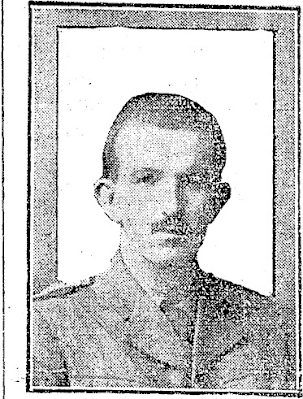
48088 Private Robert Barclay McLaren, 1914-12/7/1942.

Robert Barclay was a farm labourer in the Maniototo when he married his wife elizabeth and the went off to war.


MARRIAGES

MCLAREN — ANDERSON — On August 26, 1941, at the bride’s home, 18 Littlebourne crescent, by the Rev. J. Pringle. Robert Barclay, only son of Mr and Mrs D. M. McLaren, Patearoa, to Elizabeth Margaret, elder daughter of Mr and Mrs A. F. Anderson, Dunedin.  -Otago Daily Times, 4/9/1941.


Robert was with the 20th Battalion when they were sent to a place called Ruweisat Ridge, to try and stop the drive of Rommel's army towards the Suez Canal.  The Ridge “had to be held at all costs,” explained one British general, “for its loss would give the enemy observation and a springboard on to the area through which ran the whole communications of the Eighth Army.”

The New Zealanders and other formations of the British Army were dug in on the Ridge and were about the last barrier to an Army which had almost reached the limit of its supplies and weapon - especially tanks.  But a breakthrough would would win the war in North Africa and had to be attempted.  The breakthrough did not occur and the defence of Ruweisat Ridge gave the British forces behind them time to construct a defensive line around a place called El Alamein.

The day that Robert McLaren died is described in the 20th Battalion's "Official History."

Twenty-third Battalion and the Maoris had become ‘boxed’ at the debussing point and this had caused some of the units to deviate from their correct line of march to the left. At 9.30 p.m. the Brigade Commander advised that the brigade was too far forward and to the west. Accordingly, at 1 a.m. on 12 July the brigade formed up in close formation and moved 800 yards east, taking up a position with the 20th in front, 19th on the left, and the Maoris in the rear. From 5.30 till 9.30 a.m. the enemy shelled and mortared the positions heavily and our artillery replied with counter fire. After the four-hours' blitz firing continued spasmodically till 2.30 p.m., when things became comparatively quiet. A check-up on casualties showed that the 20th had not fared so badly: one officer slightly wounded, one man killed and twenty wounded.


FOR THE EMPIRE'S CAUSE.

McLAREN. — Died of wounds, Egypt, Private Robert Barclay, dearly loved husband of Elizabeth M. McLaren, and dearly loved only son of Donald McD. and Isa McLaren, Patearoa; aged 28 years.  -Otago Daily Times, 30/7/1942.


In Memoriam

McLAREN. —A tribute of love and in proud mempry of Private Robert Barclay McLaren, died of wounds, July 12, 1942. Inserted by his wife, mother and father, Patearoa.  -Otago Daily Times, 12/7/1943.


Ranfurly Cemetery.


Sunday, 16 October 2022

8/767 Lieutenant Thomas Holmes Nisbet, MID, 1/8/1892-7/8/1915.

The Otago Daily Times states that Mrs T. Nisbet yesterday received a private cablegram from Heliopolis, stating that her son, Lieutenant Nisbet, who was reported wounded in the Dardanelles fight, was wounded in the hand and arm, and that he is progressing satisfactorily.  -Oamaru Mail, 11/5/1915.


ROLL OF HONOUR

Careers of the Fallen

LIEUTENANT T. H. NISBET. 

Lieutenant Thomas Holmes Nisbet, reported killed, was formerly a subaltern in A Company, 4th (Otago) Regiment, and on joining the Otago Infantry Battalion was posted to the 10th (North Otago) Company. He was an ex-Waitaki High School boy, and was studying law at Otago University when he enlisted. He is a son of the late Rev. D. Nisbet, of First Church, and wae a prominent member of the University Football Club. Lieutenant Nisbet was recently mentioned in dispatches.  -Auckland Star, 13/8/1915.


LIEUTENANT T. H. NISBET. 

A correspondent writes as follows: If you can find space in your columns for the enclosed little personal notice of the late Lieutenant T. H. Nisbet I feel sure your courtesy will be gratefully appreciated by a number of his friends. No man answered the call more promptly nor with a fuller appreciation of his responsibilities than did Thomas Holmes Nisbet, now reported killed in action at the Dardanelles, where he had already suffered one wound and had also been mentioned in despatches. For one so young — only 23 this month — Nisbet was an interested student of Imperial affairs, and as a Territorial officer was noted on all hands for his keenness. But it is of the man himself I wish to speak. Tall, erect, broad-shouldered, and of splendid physique, with a fine, handsome face set off by thick black hair, Nisbet made a conspicuous figure in any company; while his character, marked by a happy combination of earnestness and buoyant spirits, attracted a wide circle of friends and admirers. His genial smile was proverbial. At capping carnivals he was a host in himself. His gifts were of a varied order. Intellectually he had the talent to succeed in any profession, while as an athlete he had proved himself a worthy opponent in football, boxing, and rowing. Whatever he was doing at the moment, into that he put his whole heart and soul and sinew, and whatever duty he was called upon to perform, whether reckless bravery or patient endurance was required, we may he certain that he acted in a manner that will he an inspiration to his companions till the long days of trial be over. Somewhere out on that distant hillside he is lying, while we, thinking of his untimely death, remember with gratitude our past friendship, and our hearts beat faster as we repeat the grand old words: “Dulce et decorum est pro patria. mori.” Such is the death he would gladly have chosen, and we may be sure he met it bravely. Though he is gone from our sight, and another shall not take his place in our hearts, sorrow for our loss must give way to pride in our departed friend. Let us write his epitaph: “He answered the call.’’   -Evening Star, 13/8/1915.


"IT WAS NOT THE FIGHTING."

HARDSHIPS TELL ON TROOPS.

"It was not the fightng, it was the hardship" said a thin-faced soldier on arrival at Dunedin, and who is marked down for a hospital case. He left a wife and one child in Dunedin to go with the main force. "I had to be in it," he added, "and after many weeks of fighting had to knock under to disease." This man has no hesitation in naming the finest officer he served with on the peninsula — Major Statham — and he has also great praise for Lieutenant Nisbet.  -Poverty Bay Herald, 29/12/1915.

Northern Cemetery, Dunedin.


Thursday, 13 October 2022

43644 Pilot Officer Edward Read Osborn, 27/7/1919-28/11/1940.

Edward Read Osborn took off in a 102 Squadron Whitley bomber on the night of November 28, 1940, on a two-plane raid on docks and shipping at the French port of Le Havre.  Osborn's plane was never seen again.


PILOT OFFICER OSBORN

MISSING AFTER COLOGNE AIR RAID 

Pilot-officer Edward R. Osborn, of Dunedin, who was reported in the ‘Star’ last night as missing after air operations on November 26, is the youngest of three sons of the late Mr S. H. Osborn on active service. His brothers are Lieutenant John S. Osborn (an engineer in the Royal Canadian Navy) and Private Henry C. Osborn (who is with a machine gun section of the First Echelon in Egypt.) 

Pilot-officer Osborn attained his majority on July 27 last. He was born in Dunedin and attended the Normal School, then the Otago Boys’ High School, where he was a representative junior hockey player for the four years he was at school. After leaving be joined the office staff of the New Zealand Paper Mills. In 1938 he was absorbed into the Civil Reserve Air Force at Taieri, and when war broke out he was one of the first batch of acting pilots officers to go into training at the Taieri aerodrome. On March 23 he left New Zealand to join the Royal Air Force with pilot officer’s rank on a short service commission.   -Evening Star, 30/11/1940.


ROLL OF HONOUR.

OSBORN — To the gallant memory of my brother. Pilot Officer Edward Read Osborn, R.A.F.; aged 21 years.

Per ardua et astra. 

— Inserted by his sister, Helen Banks, Sumner.  -Press, 28/11/1941.

IN MEMORIAM

OSBORN. — A tribute to the memory of our gallant lad, Pilot-officer Edward Read, R.A.F., killed in action November 28, 1940. He died that we may live.

 — Inserted by his loving mother and brothers (overseas).  -Evening Star, 28/11/1942.


OSBORN. — A tribute of love to the memory of my dear son, Pilot Officer Edward Read Osborn, R.A.F., killed in action November 28, 1940. 

Not just to-day, but every day. 

In silence I remember him. 

— Inserted by his mother.


Andersons Bay Cemetery, Dunedin.

1015 Trooper James Patrick Heenan, 19/1/1873-9/8/1901.

Trooper Heenan, of the fourth contingent, states, in a letter to his father, that he had received a baptism of fire at Bulawayo. Someone had apparently dropped a cartridge in the fire, round which five of the men were sitting. The cartridge exploding, the writer received four flesh wounds in his leg., Tho wounds were fortunately not serious, and he soon recovered.  -Otago Daily Times, 30/8/1900.

Mr Denis Heenan, Cumberland street, Dunedin, has received two letters from his son, Trooper James Heenan, of the fourth contingent. The news contained in the letters is substantially the same as was embodied in letters published a few days ago. Trooper Heenan appears to entertain a different opinion of the country to most of the New Zealanders. For instance, he says: "The Transvaal is a beautiful country, and it is no wonder that the Boers fight for it. It is barren and poorly watered in places, but in other districts the land is marvellously rich, and will grow anything. It is a country capable of sustaining an enormous population from an agricultural point of view alone, without taking into account its mineral resources, which experts declare to be of great promise. It may not, like the land of Canaan, be flowing with milk and honey, but, take my word for it, some day, under British rule, it will flow with good silver and gold. It makes one feel strongly tempted to stay. I shall go back with the contingent, and then make up my mind about, coming here."  -Otago Daily Times, 1/12/1900.


THE TAGUS CONTINGENTS.

SPECIAL EDITION.

LIST OF THE RETURNING TROOPERS. (excerpt)

The statement that there are six invalids by no means represents the actual position. Drs Hodges and De Lautour report that there is a considerable amount of sickness on board, and on inquiry we learn that there are 28 men in hospital. The majority of these are suffering from pneumonia. 

There are sixteen convalescents. 

Of the twenty-eight cases in hospital eleven are serious, amongst these being Trooper Heenan, of Dunedin, who is down with abscess on the liver and other complications. 

Dr De Lautour has, we understand, been inquiring as to the possibility of receiving the worst of the 28, cases at the Dunedin Hospital, and if they cannot be received, on account of the institution being so full, he has recommended the Premier to set up a special hospital on Quarantine Island, and to authorise placing a special band of nurses there. 

None of the forty-four cases referred to could be transhipped by the vessels bound for the Bluff. They are to be landed at Port Chalmers as soon as possible. The Tagus herself comes up to the Port wharf this evening. From here she will proceed to Wellington to coal, and then go back to South Africa. 

The men desire us to praise the ship and her officers, speaking in the highest terms of their treatment on board. 

When our fourth page went to press the volunteers were all assembled at Port Chalmers to receive Gunner Kendall’s body and accord it a military funeral. At the last moment, however, word came from his relatives at Hokianga asking that the body might be sent North, and by instructions of the Government Captain Waters (Port Navals) ordered a leaden coffin from Mr Manning, of Port Chalmers. The body will be sent on to Auckland. 

The cause of Kendall’s death was embolism —a clot of blood in the veins reaching a vital organ. 

Seth Kyle (of Dunedin) died on June 27 of peritonitis, and was buried at sea, the service being read by Colonel Davis, who is in charge of the force, with Lieutenant H. H. Browne as staff officer and Captain Davy attached.  -Evening Star, 11/7/1901.


Through the courtesy of Lieutenant-colonel De Lautour we learn that the invalided members of the returned contingents are now all convalescent, with the exception of Trooper Heenan, whose condition is still serious.  -Otago Witness, 7/8/1901.


DEATH OF TROOPER HEENAN. 

Death has claimed another of our returned troopers. Trooper Heenan, of the Fourth Contingent died at the Dunedin Hospital af three o’clock this morning. Deceased was a son of Mr D. Heenan, of this City. Trooper Heenan underwent an operation while the Tagus was at Albany. On arrival at Dunedin he was found to be suffering from an abscess on the liver. He was again operated upon, and though for a time he appeared to be making progress towards recovery, his strength gradually ebbed away, and he died this morning.   -Evening Star, 8/8/1901.


TROOPER HEENAN'S FUNERAL.

The above took place yesterday afternoon. Trooper Heenan who was a son of Mr D. Heenan, of this City, underwent an operation on board the Tagus at Albany. On arriving at Dunedin it was found that he was suffering from an abcess on the liver, and he was again operated upon. Though for a time he appeared to be making progress towards recovery, he gradually sank, and died in the hospital early on Thursday morning. A vast crowd assembled to see the remains of the young man conveyed to their last resting place in the Northern Cemetery, and at the time the cortege moved off several thousand persons were in the vicinity. In the van of the procession came the firing party, consisting of a sergeant, a corporal, and twelve men of the North Dunedin Rifles, with arms reversed, and following was the Garrison Band, with signs of mourning upon their instruments. The gun carriage bearing the coffin, covered with the Union Jack, upon which were heaped many beautiful wreaths was next in the order, and in the rear came some of the relatives and more intimate friends of the family. Over fifty returned members of the contingents turned out to assist in the mournful ceremony of burying their old comrade. The volunteers, who had lined the streets, fell in two deep behind the carriages, and a large body of the general public, at the head of which was the Mayor (Mr G. L. Denniston) and Brigade-surgeon Lieutenant-colonel De Lautour, brought up the rear. The procession was a very long one, and marched slowly along Cumberland street to the strains of the Dead March. On reaching the gates of the cemetery the coffin was borne from the gun carriage on the shoulders of six members of the Fourth and Fifth Contingents to the grave, and prayers were read by the Rev. Father Murphy. On the completion of the church service the firing party fired three rounds of blank ammunition, the bugles rang out, and the crowd moved quietly away. 

The volunteers' parade state was as follows: District staff: Brigade-surgeon Lieutenant-colonel De Lautour, Major Beal (in charge). Lieutenant Robertson, Staff-Sergeant-major Taylor. 

Officers of contingents returned from South Africa: Captain Nicolson, Lieutenants McMillan and Macdonald. 

Dunedin Garrison Band: 1 bandmaster drum-major, 2 color-sergeants, 1 sergeant, 22 bandsmen; total, 27.

Dunedin Navals: 1 captain, 2 lieutenants, 2 color-sergeants, 4 sergeants 71 rank and file; total, 50.

Port Chalmers Navals: 1 sergeant, 7 rank and file; total, 8.

B Battery: 3 sergeants, 35 rank and file; total, 36. 

Dunedin Engineers: 1 captain, 3 lieutenants, 1 color-sergeant, 3 sergeants, 79 rank and file: total 87. 

Dunedin City Guards: 1 lieutenant, color-sergeant, 2 sergeants, 22 rank and file; total 26. 

North Dunedin Rifles: 2 lieutenants, color-sergeant, 3 sergeants, 44 rank and file; total, 50. 

Dunedin Highland Rifles: 1 servant 21 rank and file: total, 22. 

Dunedin City Rifles: 1 lieuteuant, 3 sergeants, 27 rank and file; total 31.

Dunedin Rifles: 1 lieutenant, 3 sergeants, 23 rank and file; total, 27. 

Wakari Rifles: 1 captain, 1 lieutenant, 1 color-sergeant, 4 sergeants, 44 rank and file, total, 61.

Caversham Rifles: 2 sergeants, 24 rank and file; total, 26. 

Dunedin Cycle Corps: 2 lieutenants, 1 color-sergeant, 1 sergeant, 12 rank and file: total, 16. 

Dunedin Bearer Corps: 2 sergeants, 30 rank and file; total, 32. 

Dunedin Engineer Cadets (in charge of .Lieutenant Ross): 2 color-sergeants, 4 sergeants, 64 rank and file; total, 70. 

High School Cadets: 1 captain, 1 lieutenant, 1 color-sergeant, 3 sergeants, 31 rank and file; total, 37. 

Returned contingent members: 1 captain, 45 troopers, total. 51. 

Grand total, 679.   -Evening Star, 12/8/1901.


Northern Cemetery, Dunedin.


William McAdam, 1856-25/3/1900

Intimation has been received of the death on the 28th March, at Umtali, Rhodesia, South Africa, of Mr William McAdam, eldest son of Mrs McAdam, of Dunedin. The deceased gentleman was well-known in Dunedin. He was secretary for some years of the Walton Park Coal Company, and afterwards manager of the Acme Manufacturing Company. He left for South Africa nearly two years ago. He contributed an account of some of his experiences in that country to our columns, and only this week we published a letter from him, pointing out the possibilities of a large trade between this colony and South Africa.  -Otago Witness, 12/4/1900.


McADAM. — On the 25th March, at Macequece, Portuguese East Africa, from malaria, William, eldest son of the late William McAdam, of Glasgow, and of Mrs McAdam, Dunedin; aged 44 years. -Otago Witness, 24/5/1900.


Northern Cemetery, Dunedin.


Wednesday, 12 October 2022

James Alexander, 1830-2/1/1884

The friends of the late James Alexander will regret to see his obituary notice in this evening's issue. Dr. Maunsell telegraphed Mr R. J. Seddon this morning as follows: — "Alexander died this morning. He was progressing remarkably well until four days ago, when he got inflammation of the lungs and sank rapidly. His friends have been with him for the last week."   -Kumara Times, 2/1/1884.


THE LATE JAMES ALEXANDER.

From a letter received by Mr Seddon from Mr J, F. Andrews, Dunedin, we have been permitted to make the following extracts concerning the late James Alexander, afflicted with cancer in the jaw, and who was so well and generally known in this district. The writer says, under date December 24: There are only two visiting days to the Hospital, Sundays and Wednesdays. So last Sunday Mrs Andrews and I visited him, and found the operation of removing the jaw had been performed the day previous. His lower jaw had been completely removed, and he looked very weak and conld not articulate. His ward-mate told me he could speak pretty fairly in the early part of the morning. I did not care to disturb him, and was going away without speaking to him, but on being, told that it would not do him any harm to speak, I went up to him again. This time one of the patients told him I was there, and he immediately roused up and tried to get up in his bed, and I could just catch the words “Oh, my back!” very thickly pronounced. He appeared very anxious to say something to me, but I could not understand him; he coughed every now and then. I took him by the hand, poor fellow; and he smiled and tried to speak. I can assure you, my dear Seddon, it was a touching sight, and deeply affected me, knowing as I did that a few short years,ago I left him a strong hearty man in the prime and vigour of life, and a man who I don't believe did a wrong action in his life; he was one whom everybody liked. If all goes well I intend sending a Press telegram to the Kumara Times, giving a short account for the benefit of his old mates. I have just called up Dr. Maunsell through the telephone, and he tells me Jimmy is doing capitally and far better than he expected, and that he (Maunsell) has hopes of him. He further said his lower jaw was full of cancer. The doctors attribute it to a clay pipe.   -Kumara Times, 4/1/1884.

Northern Cemetery, Dunedin.

Stephen Wood, 1888-10/7/1911.

Mr Sydney Woods, an electrical engineer engaged at the Bealey end of the Otira tunnel works, met with a distressing accident yesterday morning. By a mishap he managed to get his arm caught in the cog wheels of the machinery in the tunnel, with the result that the arm was stripped from the elbow to the wrist.

He also suffered much from shock and loss of blood. Mr Wood was taken to the Greymouth Hospital last night, and his injuries were further attended to. A consultation was held this morning, and the doctors are hopeful of saving the limb.  -Greymouth Evening Star, 23/6/1911.


The condition of Mr Stephen Wood, who met with a very severe accident at the Bealey Flat end of the tunnel two weeks ago, is causing much anxiety to the Hospital authorities. On enquiry we learn that the unfortunate young man has never properly recovered from the shock of the extensive injuries he then received.  -Greymouth Evening Star, 7/7/1911.


Mr Edgar Clarke, of Woodhaugh, Dunedin, an uncle of the young man Stephen Wood, who died in the Hospital as the result of injuries sustained in the tunnel at Bealey Flat, arrived in Greymouth by the Christchurch express last night.   -Greymouth Evening Star, 12/7/1911.


THE BEALEY FATALITY.

INQUEST PROCEEDINGS

An inquest was held in the Courthouse this morning before the Coroner (Mr. J. G. L. Hewitt), touching the death of Stephen Wood, who met his death through injuries received while working at the tunnel works at Bealey Flat on June 21st. 

Mr. J. Hannan appeared on behalf of Messrs McLean and Sons (the contractors), by whom deceased was employed. Inspector Black conducted proceedings for the police. 

John Porter, fitter, employed by McLean and Sons at the tunnel works, Bealey Flat, said that he knew the deceased Stephen Wood, who was employed at the same end of the tunnel as witness. On the 22nd witness was engaged looking after the electric pumps, and deceased was in charge of the machinery in the power house. About 9.30 a.m. on that day something went wrong with the pumps, and witness rang up deceased to come and examine them. Deceased and witness entered the tunnel together. The pumps were stopped. Deceased instructed witness to take the cover off the pumps while he examined the brushes. Deceased placed one foot on the bed plate of the motor and tapped the brushes with the wooden end of the hammer which he had in his hand. He then said to witness "She is right now. Give her a go." Witness understood this to mean to start the power, so he switched it on. Witness then noticed deceased leaning over as if he were going to fall, and he (witness) immediately switched off the power to stop the machinery. Deceased fell right across the rails and as he was lying down he said to witness "The pumps have done for me now," and he moaned as if in pain. Witness examined deceased and saw that one arm was hanging and bleeding and the clothing was all torn.

The accident was caused through the overcoat of deceased catching in the machinery and pulling him in. The nearest one to the deceased except witness, was five or six yards away. Witness called for assistance and when this arrived witness rang up the office at Otira and told them to send a doctor at once as there was a man very badly injured. No doctor arrived. Deceased was taken on a trolly to the change house where he received first aid from Mr. Grant, and he was then conveyed to the Greymouth Hospital. Deceased was a very steady man and witness had never known him to have a drink of any description. The machinery was not guarded in any way before the accident. The electric pump had been worked by witness for two years and during the whole of that time it had not been guarded. Witness considered that a guard was necessary to protect the workmen. If the machinery, had been guarded then as it was now, no accident would have occurred. Witness had never complained about it to any one. He could not say why he had not done so. 

To Mr. Hannan: Deceased was in charge of the electric works at the tunnel, but he (witness) did not know what certificate deceased held. Witness was under the orders of deceased. Deceased told witness to start the machinery just prior to the accident. The accident would not have occurred if deceased had not been wearing an overcoat. The coat caught in the cogs of the machinery. An iron guard had now been placed so as to cover the cog wheels. Only one man in every shift was in charge of the pumps. He did not mean that the pumps were dangerous to the other men in the tunnel. Witness would not think of wearing an overcoat when working the pumps. 

To Inspector Black: Witness had no certificate. He was qualified to work the machinery. Witness had driven machinery for 7 years at a gold battery before he went to the tunnel works. 

AN EXPERT'S TESTIMONY. 

Charles McQueen, mechanical engineer employed by the Borough Council, Greymouth, said that he went to Bealey Flat and examined the machinery where the accident occurred. He examined the electric pumps and was shown the place where deceased stood when the accident occurred. The electric pump is a set of three throw pumps driven by an electric motor. From the electric motor to the pumps there was intermediate shaft geared up with cog wheels. There was a small platform with about a foot wide to stand on. Deceased appeared to have stood with one foot on the platform and the other on the delivery pipes that ran parallel to the platform, and was reaching over adjusting the brushes. If he had nails in his boots the slightest thing would have put him off his balance. The position that deceased was in when reaching over to adjust the brushes of his commutator and the fact that he was wearing an overcoat the slightest jerk would throw him over on the gear. Witness considered that deceased should have taken his overcoat off before going in, but in a similar case witness had often worn his own coat. The machinery was now guarded. Witness considered it absolutely necessary that the machinery should be guarded, and if the guard had been in position at the time it would not and could not have taken place. Witness had many similar pumps and they were mostly all guarded. Witness considered that it was even dangerous to men walking along the lane. 

To Mr Hannan: The electrician (Mr Woolfe) explained to witness the position occupied when the accident occurred. This was only approximately as Mr Woolfe was not present when the accident occurred. The last witness (Porter) was not present. The platform referred to was part of the bed plate. It was necessary that deceased took up the position he did in order to adjust his brushes. 

William Arthur Calwell, police constable, stationed at Otira, said that he knew deceased, and saw him at Otira, on the 22nd of last month. Deceased was then on a stretcher on his way to Greymouth Hospital. Witness examined the machinery a few days after the accident and it was then unguarded. He saw it again yesterday and it was then guarded. 

Inspector Black said that the other witness who was to have been called missed the train. All that he had done was to render first aid to the deceased. The Coroner returned the following verdict: — "The deceased died at the Grey River Hospital on the 10th day of July, 1911, the cause of his death being nervous exhaustion, resulting from combined anaemia shock and grief at the contemplated loss of his left arm, which on the 22nd day of June, 1911, had been seriously injured by being caught in some cog wheels in the machinery of an electric motor pump in the Otira tunnel. I am of the opinion from the evidence before me that one of the contributing accidents was that the said cog wheels were not guarded so were dangerous to the witness at the pumps and working in the tunnel and that if the said cogs had been properly guarded the accident could not have happened."   -Greymouth Evening Star, 17/7/1911


Northern Cemetery, Dunedin.